Restaurant floor degreasing
We target oil and protein buildup common around fryers, ranges, prep lines, and the dish area, using commercial-strength degreasers matched to tile and grout so soil lifts instead of smearing.
Serving Long Beach, California & surrounding areas
Mon–Fri 8am–6pm Sat 9am–2pm
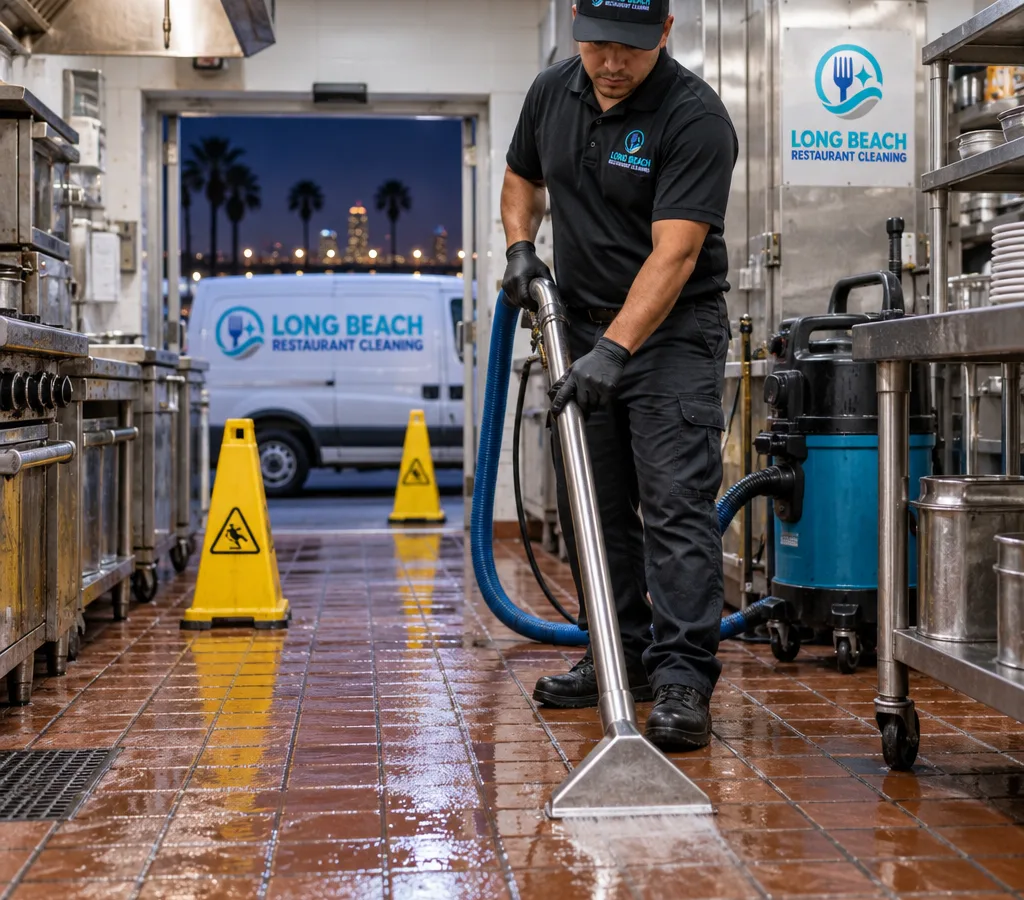
Floor cleaning · Long Beach, CA
Keep kitchen tile safer underfoot and easier to pass inspections with scheduled deep cleaning, degreasing, and grout restoration built for working restaurants.
Built for working restaurants
Restaurant floors take a constant hit from fryer oil, tracked-in grit, sugary spills, and high-foot-traffic lanes between the line, dish pit, walk-in, and back door. Over time that buildup bonds to tile texture and settles into grout joints, leaving floors darker, slicker, and harder to maintain.
Long Beach Restaurant Cleaning provides Restaurant Floor Cleaning Services designed specifically for commercial kitchen tile. We focus on the problems that cause slips and failed visual inspections: embedded grease, blackened grout, sticky residues, and film left behind by incorrect chemicals.
Our work is scheduled around service, built for commercial standards, and aimed at one goal: a cleaner floor that stays safer and looks better between cleanings. For operators who also want a broader plan beyond floors, professional restaurant cleaning can be coordinated around the same closing or off-hours window.
Detailed service scope
We target oil and protein buildup common around fryers, ranges, prep lines, and the dish area, using commercial-strength degreasers matched to tile and grout so soil lifts instead of smearing.
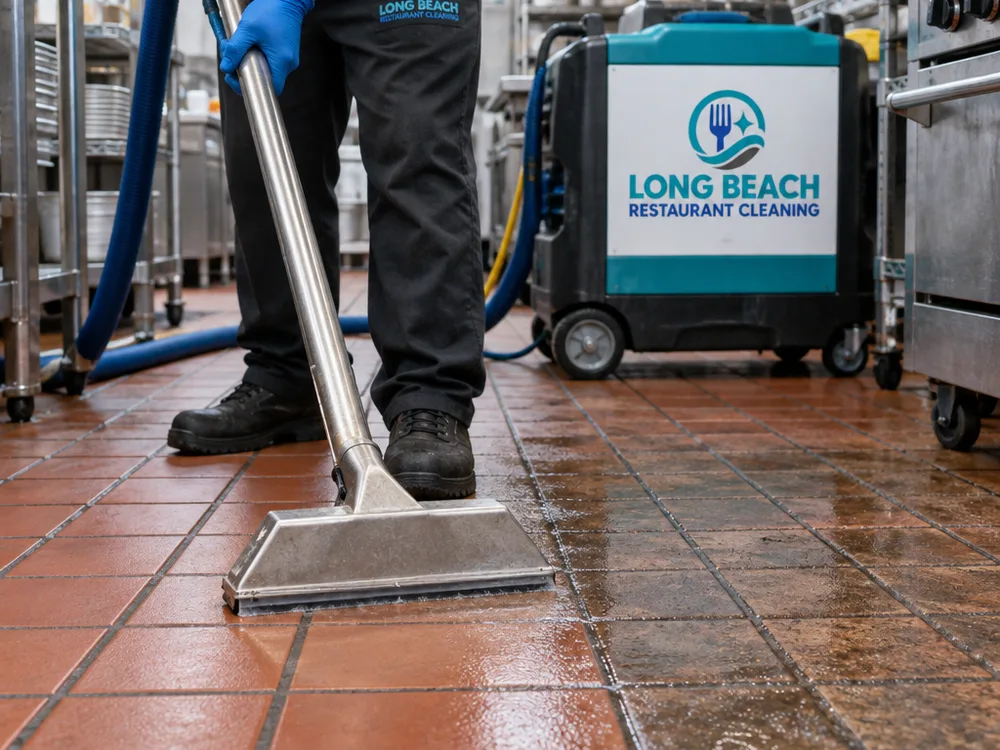
Textured quarry tile and anti-slip tile hold grime in pores and edges. We use agitation and hot-water extraction to flush the texture and recover suspended soil.
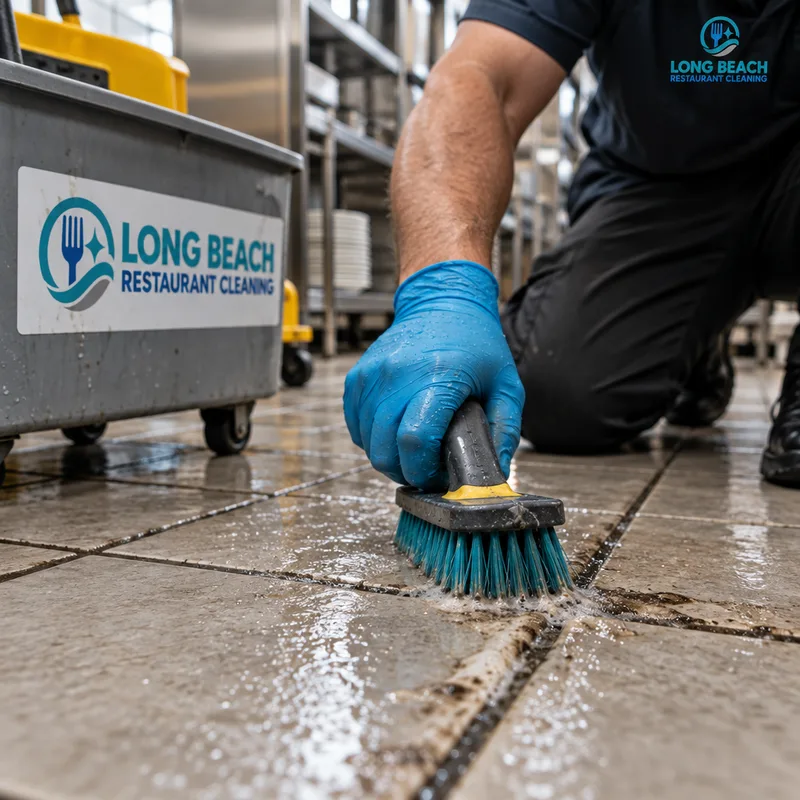
Grout lines trap grease and turn dark when they are only mopped. We deep clean grout joints and rinse thoroughly so the floor dries without a sticky film.
A floor can look clean and still be slick if detergent or degreaser residue remains. We prioritize proper dwell time, controlled agitation, and full recovery rinsing.
Most Commercial Kitchen Floor Cleaning is done after close or during slow hours so your crew can open to a dry, ready-to-work surface.
We separate kitchen, FOH tile, bar mats zones, hallways, and entries so you can prioritize the worst lanes first and build a realistic maintenance schedule.
Local floor conditions
Commercial Floor Cleaning Long Beach is rarely one uniform job, even within a single restaurant. The worst buildup usually appears where heat, oil, water, and foot traffic overlap.
Common high-soil zones we address:
We serve restaurants across Long Beach, including busy corridors where floors take a beating: Downtown near Pine Avenue nightlife foot traffic, the 2nd Street dining stretch in Belmont Shore, Retro Row on 4th Street with tight back-of-house layouts, and the Cambodia Town area along Anaheim Street where many kitchens run long hours. The cleaning approach stays the same, but scheduling and access planning change based on how your space operates.
Our shop is based at 1345 Orizaba Ave, Suite 5, Long Beach, CA 90804, which helps us respond quickly for recurring service and time-sensitive cleanups.
A practical service sequence
We identify tile type (often quarry tile, ceramic, or textured anti-slip tile), note heavy-soil zones, and confirm any problem areas like slick lanes, sticky residue, or dark grout.
We clear loose debris, place wet floor signage, and plan hose or cord routing to keep exits and work lanes practical for your staff and our crew.
Kitchen Floor Degreasing works when chemistry has time to break the bond. We apply product evenly and let it dwell long enough to loosen grease without drying on the surface.
We scrub tile texture and grout joints using brushes and floor machines matched to the surface so we can lift soil without damaging grout or leaving swirl marks.
We flush the loosened soil and recover it with extraction. This step matters: removing dirty solution is what prevents slippery residue and rapid re-soiling.
We focus on wall edges, corners, base transitions, and around floor drains where buildup often remains after general scrubbing.
We control moisture, accelerate dry time where possible, and leave the floor clean, rinsed, and ready for your team to resume normal opening procedures.
Planning your scope
Restaurant floor cleaning in Long Beach typically ranges from about $250 to $1,200+ per visit, depending on square footage and how heavy the grease and grout buildup is. Smaller kitchens or a single problem zone often land at the lower end, while full back-of-house plus FOH tile, heavy Restaurant Floor Degreasing, or first-time deep restoration runs higher.
Final pricing changes most with floor size, tile type and texture, grout condition, access (tight lines, equipment obstacles), after-hours scheduling, and whether the visit is a one-time deep clean or part of a recurring plan. The exact cost is confirmed after a walkthrough so the scope matches what your floor actually needs.
Tile and grout detail
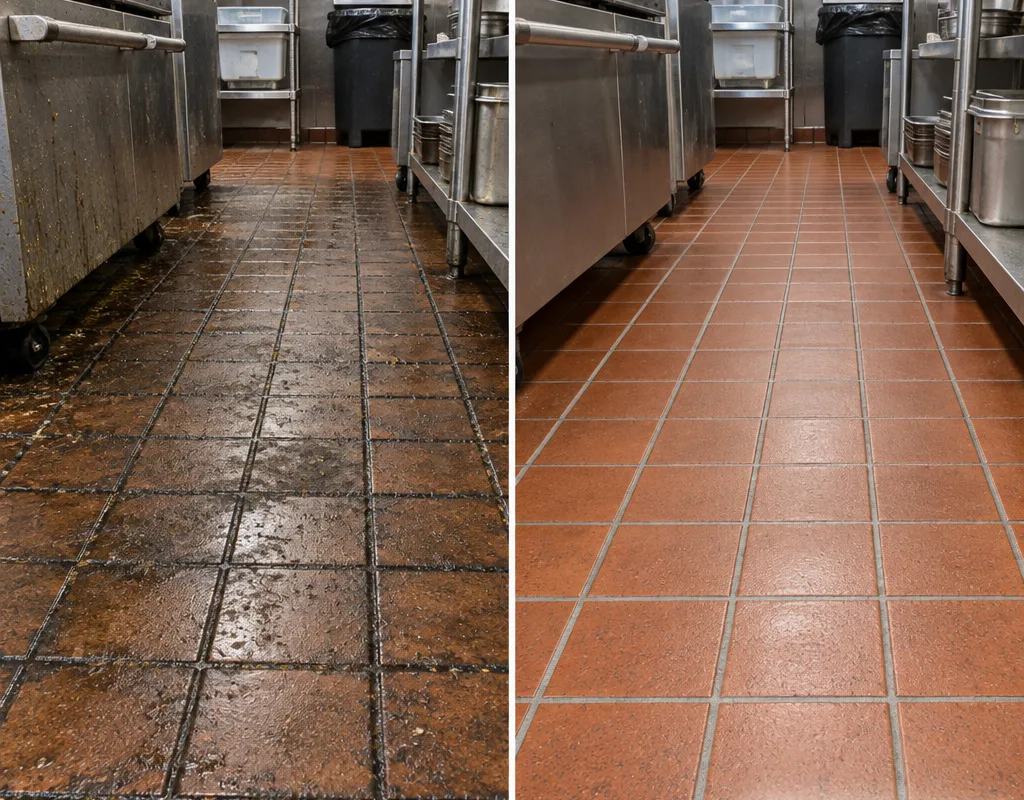
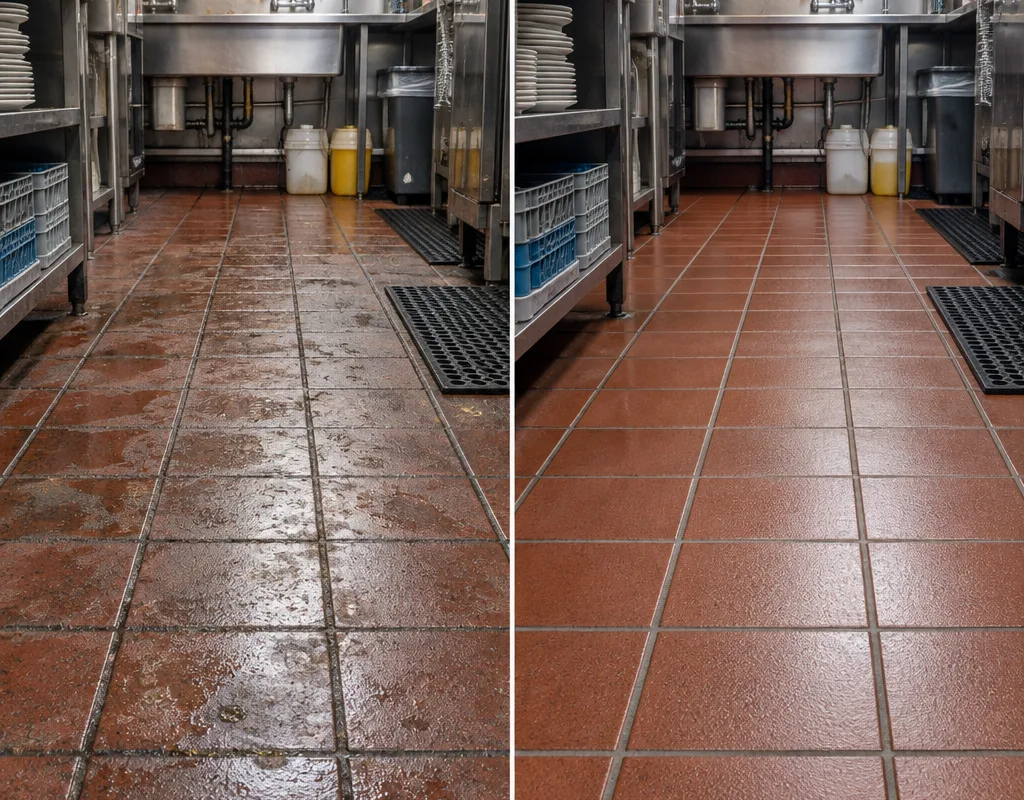
Restaurant operator feedback
“We had a slick lane by the fryers that kept coming back no matter how much we mopped. After the deep degrease and grout cleaning, the floor felt grippier and it stopped looking permanently dirty.”
“They worked after close and the kitchen was ready for prep the next morning. The grout lines by the dish area were the biggest difference. Our crew can maintain it now without fighting that greasy film.”
Before you schedule
Tell us what type of flooring you have, which areas are causing problems, and when you can schedule around service. We will confirm the scope, recommend a realistic cleaning frequency, and provide a written estimate before any work starts.